Where to feel it near Porto
- Citânia de Sanfins: circular house plans and an interpretive centre.
- Castro de Monte Mozinho: the “dead city”: vast, atmospheric, castro-roman layers.
- Tongobriga: a Roman town built over earlier pre-Roman traditions.
Where every stone remembers, and every breeze still carries a name.
Hidden Stories of Porto isn’t a history project, it’s just me, a person from Porto, collecting the little things that make this city feel alive. Stories I’ve found while walking its streets, hearing old people talk, or simply watching the light change on the Douro. Some come from books, others from memories, and a few… from family stories whispered at the table.
I’m not a historian, just curious. I like discovering the past that still hides beneath the stones, the laughter, and the names of our streets. These short stories are my way of saying: “look again”. Because here, even the ordinary has roots deeper than we think.
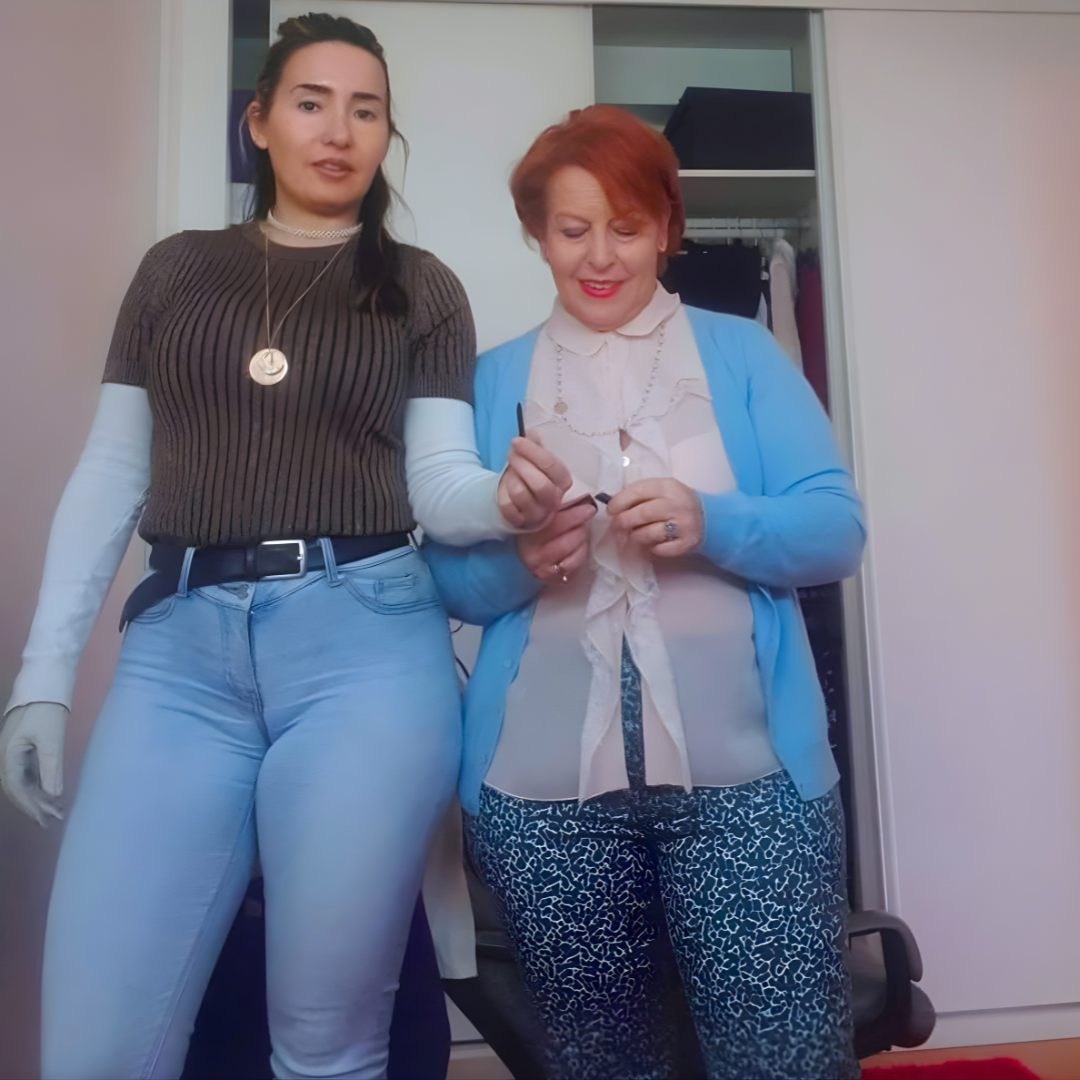
Today, we begin with something that has always fascinated me, the Celts, a people who may have once walked these same hills, and whose spirit I still see in my mother’s hazel-green eyes and auburn hair.
The Douro doesn’t just carry water; it carries memory. Long before Porto’s skyline rose in granite and glass, this land moved to another rhythm: wind, fire, and song. They were the Celts, people of the western sea, who lived close to the pulse of the earth.
Recent research suggests that the earliest roots of Celtic culture may have sprouted in the north of the Iberian Peninsula, in today’s northern Portugal and Galicia, before spreading through Atlantic Europe. If so, the Douro was not a frontier, but a cradle.
Here the Callaeci, including the Bracari, built castros, hill-top stone villages with circular houses and stout walls. Their traces still breathe at Citânia de Sanfins and Castro de Monte Mozinho, where wind hums through ruins like an old song.
Some tales name a tribe called the Dragani. Historians have not proven they existed here, the name drifts like smoke, yet the myth lingers. Fittingly, the modern city bears a dragon on its crest: a guardian symbol the Celts would have understood, a sign of earth’s hidden power.
Even the name Portus Cale, seed of the word Portugal, may echo the Callaeci. And the midsummer bonfires of St John still carry the warmth of older solstice rites. The ancient rhythm never truly stopped; it learned to sing new names.
I see that rhythm in my mother. Her auburn hair catches the light like autumn leaves; her fair skin holds the hush of northern mist; her hazel-green eyes carry the moss-green of stone. She doesn’t claim ancestry, she wears it, effortlessly, as the Douro wears the sea. In her features, the Atlantic Celt survives: warrior, poet, keeper of fire.